


Brothers on the Line
Documentary, history – NR – 80 min – Tickets $8 – Get tickets online
Wednesday, February 11 at 7:30 p.m.
Sunday, February 15 at 5:30 p.m.
Though Labor Day is a national holiday, few people who have employer-provided health insurance, sick days, vacation time, and/or retirement plans are aware of how these became the norm for many. Corporations didn’t just start providing better wages, safe working conditions, and benefits to their employees out of the goodness of their hearts. The men and women of the modern organized labor movement fought for these things, enduring all sorts of hardships, including threatened and actual physical violence, from the early 1930s to the early 1940s. And the Reuther Brothers — considered by many to be the Founding Fathers of the American middle class — were at the forefront of the struggle, with much of it playing out right here in Detroit.
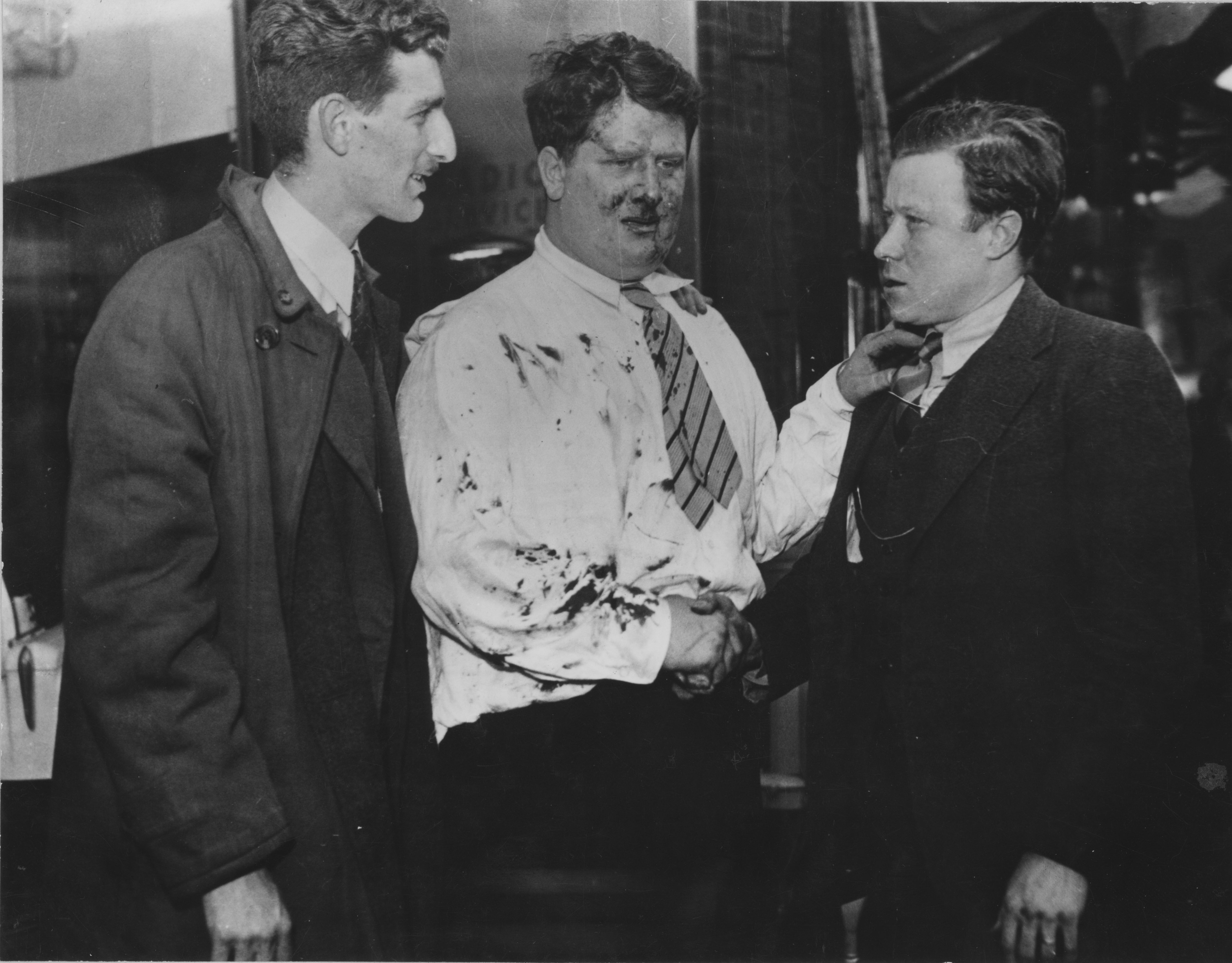
May 26, 1937. (L to R) Robert Kanter, Richard Frankensteen, and Walter Reuther regroup after they were met with violence by Ford Service Department employees during an UAW organizing attempt at the Ford Rouge Plant, Dearborn, Michigan.
Brothers on the Line is an award-winning documentary about Walter, Roy, and Victor Reuther — union organizers whose unshakeable devotion led an army of workers into an epic struggle for social justice. At the height of the Great Depression, the Reuthers were among a small band of trade unionists who took a stand against oppressive working conditions in the auto factories of Detroit and Flint.
The brothers led bold work stoppages and coordinated sit-down strikes, while facing intimidation and violence from company thugs. These actions were the foundation of the United Auto Workers (UAW) union, and its hard-fought collective bargaining agreements resulted in increased safety regulations and unprecedented quality-of-life gains, elevating millions of workers to the middle class.
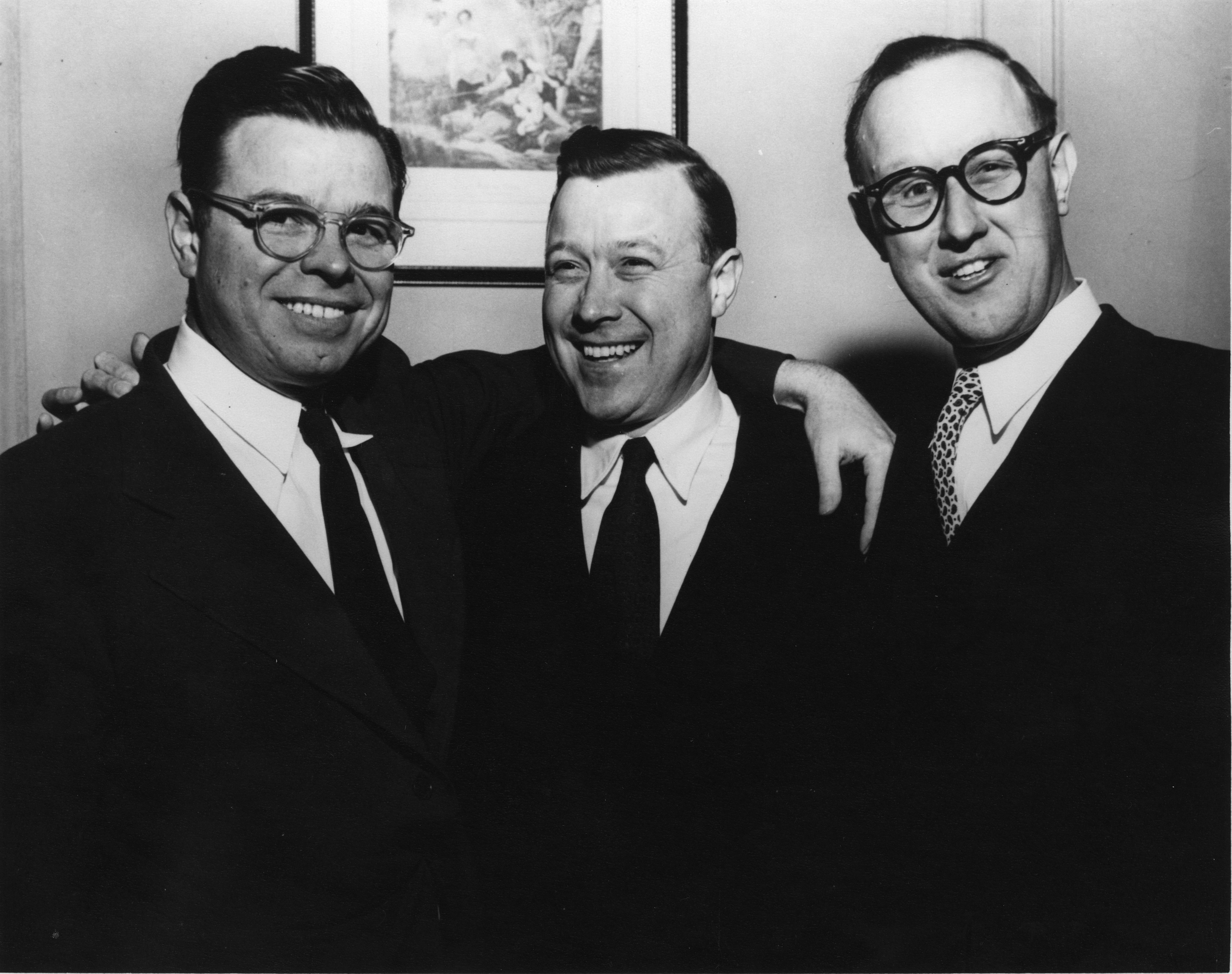
(L to R) Roy, Walter, and Victor Reuther. c. 1950s
As UAW President for nearly 3 decades, Walter was a skilled negotiator and orator. His brothers, Victor and Roy, served as advisors on community, legislative, and international affairs. The Kennedy and Johnson administrations frequently sought their counsel and the union’s resources supported Dr. Martin Luther King Jr. and the burgeoning civil rights movement. On the opposite side of this impassioned battle, corrupt company officials, organized crime, and conservative lawmakers were determined to silence the Reuther brothers. Assassination attempts shook the family to its core. With increasing power and influence on the national stage, the incendiary trio faced heart-wrenching consequences at the crossroads of their political loyalty and militant rank-and-file roots.
Directed by Victor’s grandson, Sasha, and narrated by Martin Sheen, Brothers on the Line is a stirring personal story of determination, sacrifice, triumph, and tragedy. The Reuther brothers’ odyssey is a microcosm of the American experience that resonates far beyond their era, from the automaker bailout and Detroit bankruptcy to debates over national healthcare, efforts to rebuild the middle-class, and the Occupy movement.
Cinema Detroit’s screenings of Brothers on the Line coincide with February 11, 1937, the day the six-week-old Flint sit-down strike ended with General Motors’ recognition of the United Auto Workers at the bargaining agent for GM employees. As the film details, this event was in effect the beginning of the nation’s industrial unionism. Local labor experts will introduce and discuss the film, providing context and exploring the legacy of the labor movement in the present day.
Tony Paris, lead attorney at Detroit’s Sugar Law Center for Economic and Social Justice, will introduce the film and moderate discussions that will follow the screenings. Paris specializes in workers’ rights regarding plant closings & mass layoffs, wage & hour actions, unemployment insurance benefits, and employee organizing & NLRB filings.
On February 11, Francis Shor will join Paris to discuss the film. Shor, Professor Emeritus of History, recently retired after teaching for 40 years at Wayne State University. He specialized in the social and cultural history of 20th Century America. He is the author of three books and scores of articles, some of which deal with labor in the United States, Australia, and New Zealand.
Steve Babson and Graham Cassano will join Paris for the February 15 discussion. Babson is a volunteer organizer in Detroit Eviction Defense, which fights to keep people in their homes. He is retired from Wayne State University, where he worked in the academic staff of the Labor Studies Center, an adult-education extension program serving area workers and unions. He earned his Ph.D in history from Wayne State, and has authored a number of books including Working Detroit: The Making of a Union Town, and The Color of Law: Ernie Goodman, Detroit, and the Struggle for Labor and Civil Rights.
Cassano is associate professor of sociology at Oakland University. His most recent book is A New Kind of Public: Community, Solidarity, and Political Economy in New Deal Cinema, 1935-1948 (Brill, 2014).
Share this:

Categories: Features




2 replies »